

Storing Opened Cat Food: Wet and Dry Food
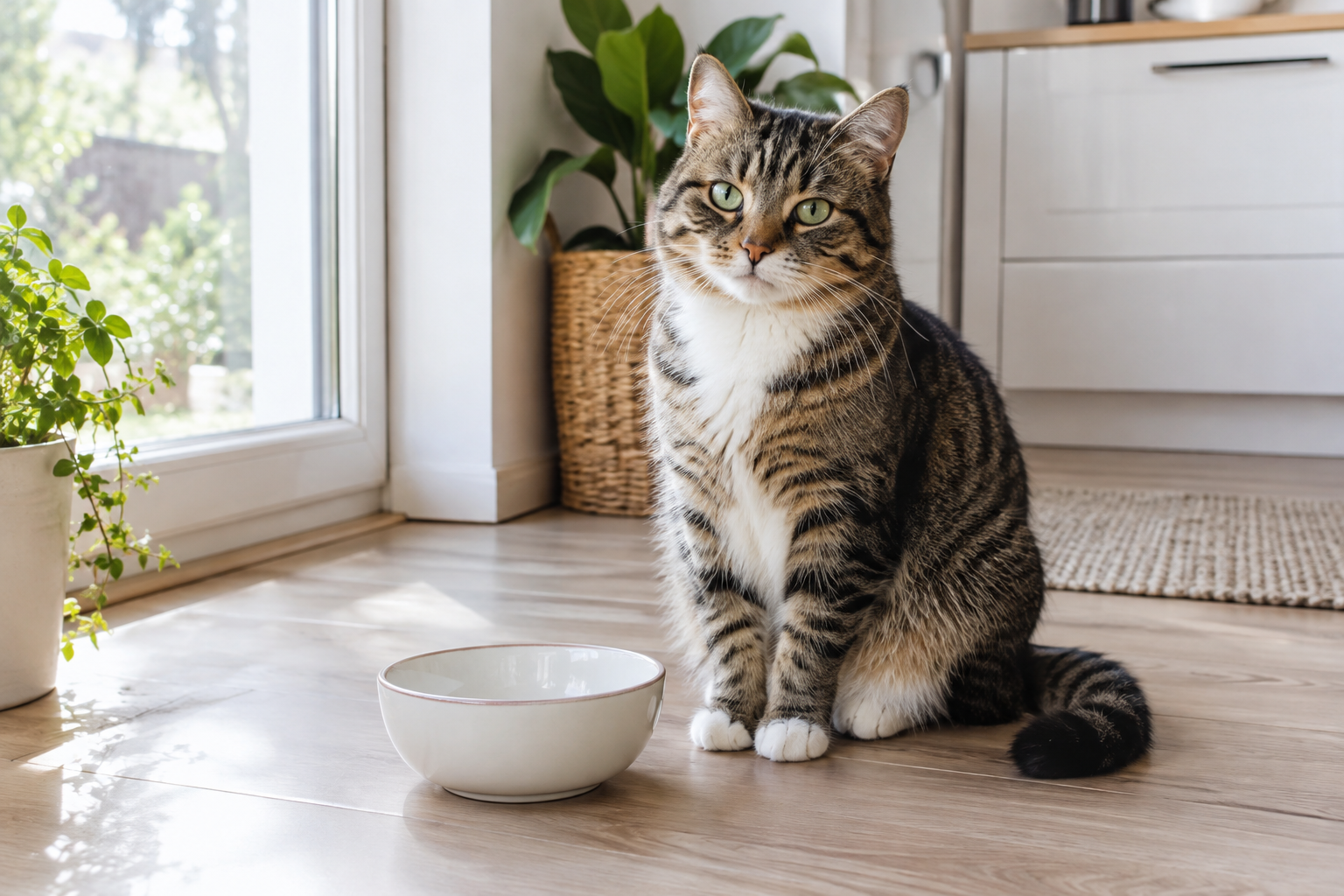
An opened can of cat food should never be left sitting on the counter overnight, and dry kibble has no business sitting in an unsealed bag. Once opened, wet food must be covered and refrigerated, while dry food keeps best in its original packaging stored somewhere cool and dry. Below, you’ll find recommended timelines, safe storage temperatures, and practical tips to keep your cat’s meals fresh, flavorful, and safe for their stomach.
Quick Guide: How Long Does Cat Food Last?
| Food Type | In the Bowl at Room Temperature | After Opening |
|---|---|---|
| Wet food (cans, pouches, trays) | Roughly 1–2 hours (1 hour in warm weather) | Up to 3 days covered in the fridge |
| Dry food (kibble) | A couple of days before going stale | 2–3 months in the original sealed bag |
| Frozen wet food | Thaw in the fridge, never on the counter | Follow package guidelines |
These guidelines reflect recommendations from Purina, PetMD, and Hill’s. Manufacturer guidelines can differ, so always give priority to the instructions printed on the package.
Storing Opened Wet Food: Up to 3 Days in the Fridge
Wet cat food contains roughly 70–80% moisture (Hill’s). The moment a can is opened, that moisture begins evaporating, and the food becomes an ideal breeding ground for bacteria. Canned food remains sterile only until the seal breaks. The US Food and Drug Administration (FDA) gives straightforward advice: refrigerate leftovers immediately or throw them out, and make sure your refrigerator is set to 4°C (40°F) or colder.
Recommended storage times for opened canned food vary depending on the expert source:
- Purina and PetMD: Up to 3 days.
- Hill’s: 5–7 days refrigerated at 4–7°C (40–45°F).
If the product label specifies a shorter window, follow that recommendation. When no guidance is provided on the packaging, treating 3 days as your cutoff is the safest route.
How to Store Canned Cat Food Step by Step
- Dish out your cat’s meal right after opening the can, leaving the remainder inside.
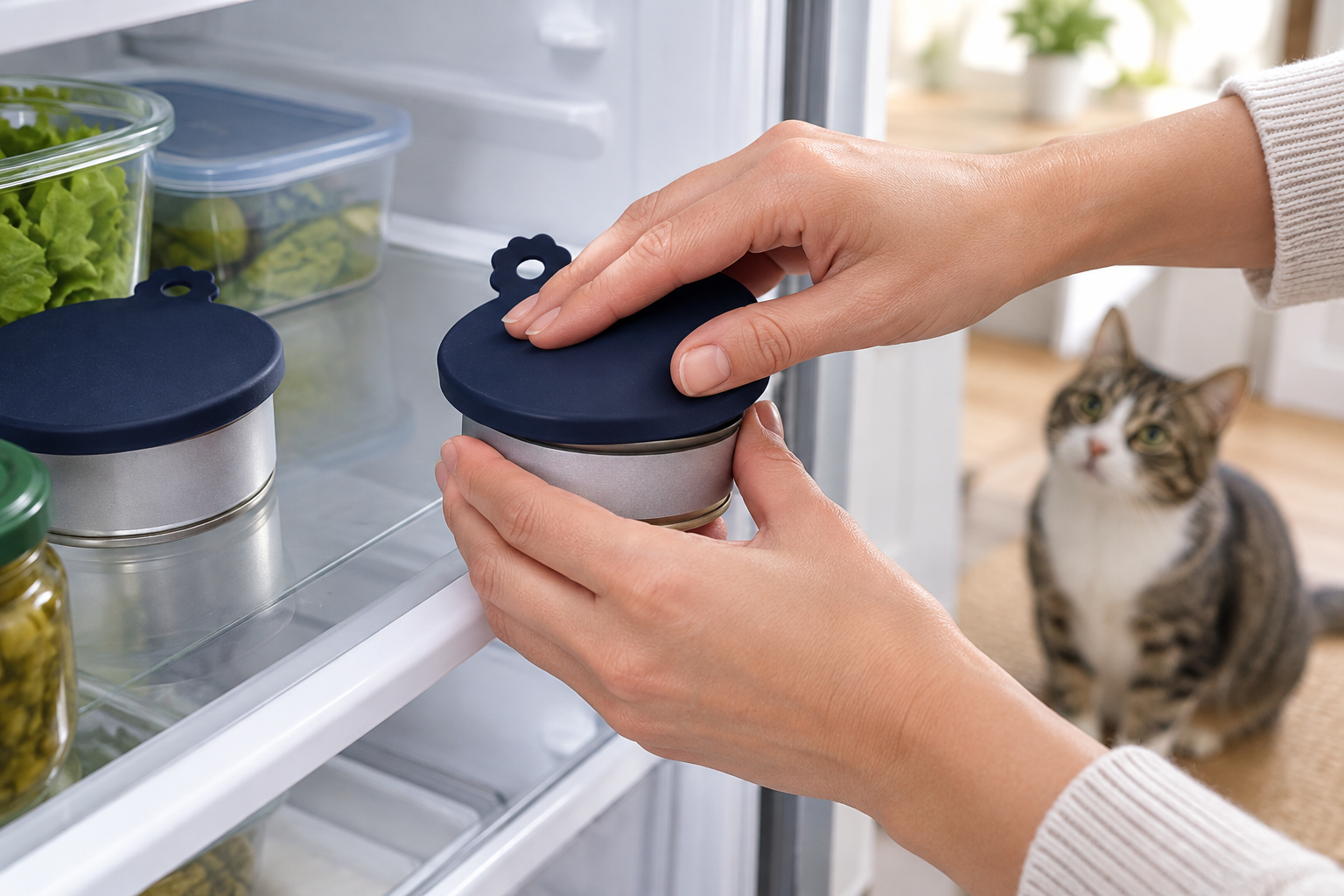
- Seal the can with a tight-fitting lid. Hill’s recommends a dedicated plastic lid; plastic wrap works in a pinch, but a reusable lid locks in moisture and odors much better.
- Keep the can on an interior refrigerator shelf rather than in the door, where temperatures fluctuate every time it opens.
- Jot the date you opened the can on the lid or a piece of masking tape so you don’t lose track of the 3-day mark.
- At feeding time, dish out only what your cat will eat immediately, and put the rest straight back into the fridge.
For example, if you open a can on Monday at 6:00 PM, following the 3-day rule means any leftovers should be discarded by Thursday evening.
A snug silicone lid locks in moisture and stops food aromas from taking over your refrigerator. Ontario silicone lids are available to fit 95 g, 200 g, and 400 g cans, as well as larger 400 g and 800 g cans.


Pouches and Trays
Pouches can be frustratingly hard to reseal properly. PetMD warns that opened pouches and plastic trays begin to spoil after just a few hours at room temperature. Transfer any uneaten portions into a clean, airtight container before placing them in the fridge, and follow the same 3-day rule as you would for canned food.
Choosing smaller single-serving portions is often the easiest way to avoid waste. Convenient options like Catfest 70 g, Ontario 80 g, and Aatas Cat 80 g packs are ideal for cats that prefer smaller meals.


How Long Can Wet Food Sit in the Bowl?
Wet food spoils quickly at room temperature. PetMD advises against leaving wet food out for more than an hour. Broader food safety guidelines allow up to 2 hours, dropping to just 1 hour if room temperatures climb above 32°C (90°F). Hill’s notes that wet food can sit out for up to 4 hours in rooms warmer than 10°C (50°F). Given the varying recommendations, erring on the side of caution is best.
Here is what that looks like day to day:
- If your cat grazes: Feed smaller meals several times throughout the day rather than leaving out one large portion in the morning.
- If you work out of the house: Offer dry kibble during the day, or invest in an automatic feeder equipped with ice packs, as recommended by PetMD.
- Never layer fresh food over leftovers. Throw away any uneaten remnants and wash the dish first.
- Wash the bowl after every feeding with hot water and dish soap, per FDA guidelines. Fresh food should never be served in a bowl crusted with dried leftovers.
The type of bowl you use also affects day-to-day hygiene. Learn more in our guide on how to choose the right cat bowl and browse the options in our Cat bowls section.
Serving Food Straight from the Fridge
Many cats turn their noses up at cold food straight out of the refrigerator. While warming food isn’t strictly necessary, bringing it closer to room temperature makes it far more aromatic and appealing to picky eaters. Try stirring in a spoonful of warm water to take the chill off. If you use a microwave, transfer the portion to a microwave-safe dish first, warm it for just a few seconds, stir thoroughly, and test it with your finger to check for hot spots that could burn your cat’s mouth. Put the rest of the chilled food back in the fridge right away.
If your cat turns down even freshly opened food, take a look at our advice on what to do when your cat won’t eat.
Can You Freeze Opened Wet Cat Food?
Yes, provided the packaging does not advise against it, though keep in mind that freezing can alter the texture and make it softer (EWASH). If you decide to freeze wet food:
- Portion it out into individual meal sizes first;
- Store portions in clean, freezer-safe, airtight containers rather than freezing the open metal can;
- Always thaw food in the refrigerator—never on the kitchen counter or submerged in hot water.
Because recommendations on maximum freezing times vary, always refer to the manufacturer’s packaging. Note that unopened cans should never be allowed to freeze: PetMD points out that freezing temperatures can break the vacuum seal, compromise the can, and alter the food’s flavor, texture, and nutritional profile. Uninsulated porches, sheds, and garages are unsuitable places to store canned food over the winter.
Storing Dry Cat Food: Original Bag, Tight Seal, Cool Spot
Dry kibble is far more shelf-stable than wet food, but prolonged exposure to air and humidity will steadily degrade its quality. Over months, exposed fats oxidize and turn rancid, leaving the food stale and unpalatable. While a day or two won’t hurt, proper long-term storage is vital.
Keep Kibble in Its Original Bag
The FDA recommends keeping dry food in its original bag because the packaging contains the lot code, batch number, and “best by” date—essential information should a manufacturer recall occur. If you like using a storage bin, place the entire bag inside rather than pouring kibble directly into the container. Squeeze excess air out, roll the top down tightly, and secure it with a sturdy bag clip after every scoop.
If you must decant kibble into a separate bin, make sure it is completely clean, dry, and airtight. Wash and dry the container thoroughly before refilling it with a new batch. Hill’s notes that plastic bins can absorb and impart unwanted smells and flavors over time; clean food-grade metal or glass containers make much better alternatives.
Temperature and Shelf Life
Store dry cat food in a cool area kept below 27°C (80°F) (FDA). According to Purina, an opened bag of dry kibble should be used within 2 to 3 months when stored under proper conditions. Keep bags away from heat sources, damp areas, and sunny windowsills.
A practical rule of thumb is to buy bag sizes that match your cat’s feeding pace. If a single cat eats 40 g of kibble a day, a 2 kg bag will last about 50 days—well within the recommended 2–3 month window. A 7 kg bag, by contrast, would take that same cat roughly 175 days (nearly six months) to finish, well past its prime. In a household with three cats (3 × 40 g = 120 g daily), a 7 kg bag will be finished in about 58 days, making the bulk purchase worthwhile.


If you free-feed kibble, never top up an existing bowl with fresh food. PetMD notes that dry food left sitting out goes stale within a couple of days and readily attracts household pests. If you are unsure of correct portion sizes, check out our guide on how much to feed a cat per day. You can also explore our range in the Dry cat food category.
How to Spot Spoiled Cat Food
You cannot always rely on appearance alone, as harmful bacteria often multiply without noticeably altering how food looks. However, if food has been opened for an extended period or sat in a warm room, look out for these clear warning signs:
- A sour, rancid, or off-putting smell;
- Discoloration, dark patches, or visible mold;
- A slimy, unusually runny, or separated texture;
- A bulging, swollen, or dented can (PetMD advises discarding these immediately).
When in doubt, throw it out. If your cat develops sudden vomiting or diarrhea after eating food you suspect has spoiled, contact your veterinarian right away (Texas A&M School of Veterinary Medicine).
Simple Storage Habits That Pay Off
Keeping opened wet food tightly covered in the fridge and serving it within three days—along with storing kibble sealed in its original bag in a cool spot for no more than two to three months—is all it takes to keep your cat’s meals safe and flavorful. To cut down on waste, choose package sizes that match your pet’s eating habits. Explore our Wet cat food selection, pick up a reusable silicone can lid, and read our comprehensive guide on how to choose the right cat food for help finding the perfect diet.