

Feeding a Kitten: How Often and How Much to Feed Per Day
Kittens thrive on small, frequent meals: plan for three feedings a day until they reach six months of age, and two meals a day after that. Because their nutritional needs are so specific, they should only be fed a complete and balanced diet formulated expressly for growing kittens. Below, you will find an age-by-age feeding chart, daily portion guidelines, and warning signs that warrant a call to your veterinarian.
| Age | What to Feed | Meals per Day |
|---|---|---|
| 0–4 weeks | Queen’s milk or kitten milk replacer | Every 2–4 hours during week 1, then every 4–6 hours |
| 4–10 weeks | Weaning: milk replacer blended with soft wet food, gradually transitioning to kitten food alone | 3–4 small meals |
| 2–6 months | Complete kitten food (wet, dry, or both) | 3 |
| 6–12 months | Complete kitten food | 2 |
| 10–12 months | Gradual transition to adult cat food | 2 |
Sources: VCA Animal Hospitals, Cornell Feline Health Center, and Merck Veterinary Manual. Actual requirements vary based on your kitten’s body weight and the caloric density of their food.

Why Kittens Need Their Own Food
Kittens grow at a staggering rate. According to the Merck Veterinary Manual, a healthy kitten’s daily energy requirement is roughly 2.5 times their resting energy requirement (RER). To fuel this rapid development, kitten food must deliver substantially more calories, protein, fat, and calcium than adult maintenance diets.
The European Pet Food Industry Federation (FEDIAF) sets minimum nutritional baselines for complete growth diets, requiring per 1,000 kcal of metabolizable energy:
- At least 70 g of protein
- At least 22.5 g of fat
- At least 2.5 g of calcium
Always select recipes explicitly labeled as complete food for kittens or for growth and reproduction. Standard adult cat food simply cannot provide the nutrient density young bodies require. Complete feline diets must also supply adequate levels of taurine, an essential amino acid critical for heart function, vision, and fetal development.
How Much Food Should You Give a Kitten?
The feeding chart on your kitten’s food package is the best place to start, as caloric density varies widely from one recipe to another. If you prefer to calculate your kitten’s specific daily caloric intake at home, use the standard formula from the Merck Veterinary Manual:
- Calculate the Resting Energy Requirement (RER): 70 × [body weight in kg]^0.75.
- Multiply the RER by 2.5 to find the daily caloric target.
Example: A 2 kg kitten has an RER of roughly 118 kcal, which translates to an energy requirement of around 294 kcal per day. If your chosen wet food provides 90 kcal per 100 g (always verify the exact figure on the can or pouch), your kitten needs approximately 330 g daily—roughly four 85 g pouches, split across 3 to 4 meals.
A digital kitchen scale is the most dependable way to track portions and monitor growth. During their first six months, healthy kittens should gain about 100 g per week, averaging at least 7 g per day (VCA Animal Hospitals). Weigh your kitten once a week at the same time of day. If their weight plateaus or drops, schedule a checkup with your vet.
If you prefer free-feeding dry food, weigh out the full daily allowance each morning. This keeps grazing under control and ensures you can track their actual intake. For more on tailoring daily meal sizes, see our guide on how much a cat should eat per day.
Wet or Dry Food?
Both wet and dry formulas provide excellent nutrition, as long as they are complete, balanced, and formulated for kittens. The fundamental difference comes down to hydration: wet food contains up to 80% moisture, whereas dry kibble contains only around 10%. Kittens raised on wet food take in plenty of fluids with their meals, while those eating dry food rely heavily on the water bowl to stay hydrated (Cornell Feline Health Center, Royal Canin).
Combining both options often yields the best results:
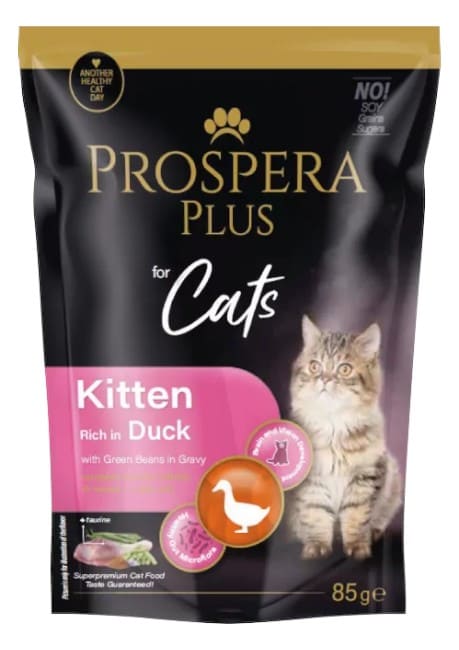
- Wet food makes weaning easy and helps entice picky eaters. For instance, Prospera Plus Kitten is tailored for kittens aged 4 weeks to 1 year and contains no soy, grains, or added sugars. CatFest kitten mousse offers an ultra-fine texture suited to tiny, sensitive jaws.
- Dry food works well for measured grazing throughout the day and will not spoil if left out for a few hours. Just be sure the combined calories of wet and dry food do not exceed your kitten’s daily requirement.
Browse our curated selections of wet cat food and dry cat food. For an in-depth breakdown of ingredients and formulas, explore our dedicated guide to kitten food.

When shopping for kibble, double-check that the bag is clearly marked for kittens. Brit Care Kitten, for example, is specifically formulated to support bone, joint, and immune system development.

Clean, fresh water should always be within reach, even if your kitten eats wet food. If your kitten ignores their water dish, switch to a broad, shallow bowl that prevents whisker fatigue, or set up a circulating pet fountain. For tips on safe, easy-to-clean feeding supplies, check out our guide on how to choose the right bowls for your cat.
Weaning: Moving from Mother’s Milk to Solids
Weaning typically begins around 3 to 4 weeks of age and unfolds across several weeks. Most kittens are fully transitioned to solid food by 8 to 10 weeks (Cats Protection, ASPCA). Take things slowly: a kitten must have clear, open eyes and steady balance before taking their first bites of solid food.
- Pour a small amount of warm kitten milk replacer into a flat saucer. Dab a droplet on the kitten’s lips to encourage them to lap it up.
- Blend a teaspoon of wet kitten food into the milk replacer until you get a smooth, pourable slurry.
- Gradually decrease the amount of milk replacer over two to three weeks until the kitten is eating wet food straight from the dish.
- Offer small portions several times a day. In the beginning, the goal is simply introducing your kitten to the bowl and familiarizing them with new flavors, not feeding full meals.
Caring for an Orphaned Kitten
If you find yourself hand-rearing an orphaned kitten under 3 to 4 weeks old, contact a veterinarian right away for an in-person assessment and hands-on guidance. Standard protocol from VCA and the ASPCA includes:
- Formula: Use only commercially formulated kitten milk replacer (such as KMR). Never feed cow’s milk or plant-based milks; they lack the protein, fat, and taurine kittens need, and their high lactose levels trigger severe, dehydrating diarrhea.
- Volume: Offer roughly 180 ml of prepared formula per kilogram of body weight daily. A 300 g kitten needs about 54 ml per day, distributed across frequent feedings.
- Schedule: Bottle-feed every 2 to 4 hours around the clock during the first week of life, stretching to every 4 to 6 hours until weaning begins.
- Temperature: Warm the formula to 35–38 °C (95–100 °F). Test a drop on your inner wrist—it should feel pleasantly lukewarm.
- Stimulation: Neonatal kittens cannot urinate or defecate on their own. After every single feeding, gently wipe their lower abdomen and genital area with a warm, damp cotton ball or washcloth until they eliminate completely.
Young kittens have virtually no glycogen reserves. If a kitten under 6 weeks misses meals, their blood sugar can plummet into severe hypoglycemia within 12 hours (Cornell Feline Health Center)—a medical emergency that requires immediate veterinary care.
Switching Diets Without Upsetting the Stomach
Sudden changes in food are a leading cause of gastrointestinal upset, vomiting, and diarrhea. VCA recommends introducing any new food gradually over the course of a week:
- Days 1–2: 75% current food, 25% new food
- Days 3–4: 50% current food, 50% new food
- Days 5–6: 25% current food, 75% new food
- Day 7: 100% new food
Some cats need far more time. The American Animal Hospital Association (AAHA) notes that it can take up to 40 days for an especially sensitive or neophobic cat to accept a new diet. If your kitten pushes their dish away, slow the transition and maintain a higher proportion of their familiar food, making sure they never stop eating entirely. For more troubleshooting tips, see our guide on what to do when your cat won’t eat.
Keep your kitten on growth formulas until they reach physical maturity, typically between 9 and 12 months. According to VCA, you can begin phasing in adult food around 10 months so the transition finishes by their first birthday. Slow-maturing large breeds, such as Maine Coons, continue growing for up to 18 months and should remain on kitten food accordingly.
Treats and Foods to Avoid
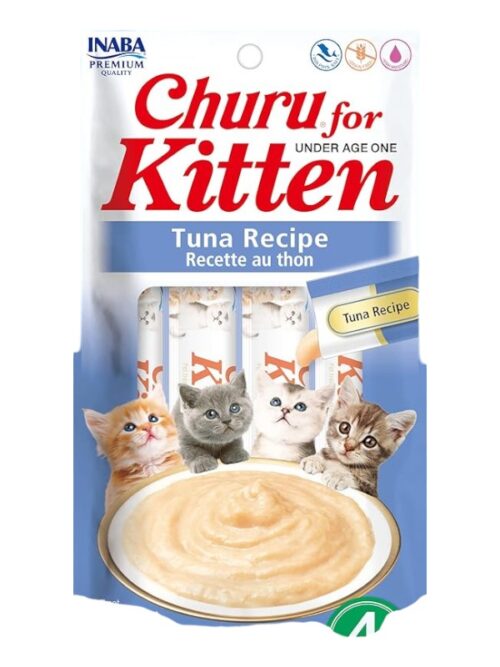
Treats should account for no more than 10% of a kitten’s daily calories, with the remaining 90% coming from complete food (VCA Animal Hospitals). The ASPCA advises an even more conservative cap of 5%. Squeezable purées like Churu Kitten make wonderful rewards for training and grooming, and work well for concealing medication—just be sure to deduct those treat calories from their daily meal portions.
Never feed a kitten any of the following:
- Cow’s milk: Kittens lose the lactase enzyme needed to process lactose around 12 weeks of age; drinking milk almost always leads to painful gas and diarrhea (VCA).
- Onions, garlic, and chives: All members of the allium family cause oxidative damage to feline red blood cells, which can trigger life-threatening hemolytic anemia.
- Chocolate: Contains theobromine and caffeine, both of which are toxic to cats and can cause cardiac arrhythmias, muscle tremors, and seizures.
If your kitten ingests any of these foods, contact your vet or an emergency clinic immediately.
When to Call the Vet
Kittens should never skip meals. Seek veterinary attention right away if:
- Your kitten refuses to eat for 12 to 24 hours, or consistently leaves most of their food untouched
- They appear lethargic, vomit, or pass blood in their stool
- They develop diarrhea and are under 4 months old (young kittens can dehydrate dangerously fast)
- Their weight plateaus across multiple check-ins or they start losing weight
Never attempt to force-feed a limp or resisting kitten, and avoid administering home remedies or over-the-counter medications without your veterinarian’s explicit instruction.
Start with the Right Nutrition
Feeding a growing kitten successfully comes down to three basic rules: choose a balanced, kitten-specific diet, feed frequent meals on a predictable schedule, and track weight gain consistently. Explore our full cat food selection to find high-quality wet and dry options suited to your kitten’s palate. As an added bonus, every order placed with us helps support homeless pets and animal shelters across Estonia.