
How to Clean a Cat Tree: From Fur and Urine Stains to Fleas
Is your cat tree caked in fur or starting to smell a bit funky? Most routine messes can be cleared away with nothing more than a good vacuuming—water should be reserved for targeted spot treatments. Here is a step-by-step guide to cleaning sisal, plush carpet, and stubborn urine stains, along with the most common mistakes to avoid.
Quick Guide: Problems and Solutions
| Problem | What to Do | What to Avoid |
|---|---|---|
| Fur and dust | Use a vacuum brush attachment or soft-bristle brush | Soaking sisal rope |
| General odors | Vacuum thoroughly and air out the tree | Heavily scented air fresheners |
| Urine or territorial marking | Blot dry, then treat with an enzymatic cleaner | Ammonia-based cleaners |
| Fleas | Vacuum thoroughly; wash removable covers on high heat | Relying solely on vacuuming |
| Frayed, worn surfaces | Leave as is if the structure remains stable | Replacing the post purely for cosmetic reasons |
Before You Start: Know What Your Cat Tree Is Made Of
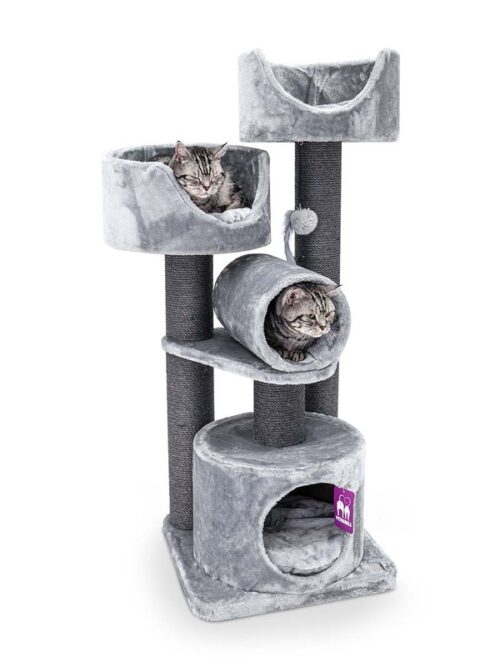
A typical cat tree is crafted from a mix of materials: sisal rope wrapped around scratching posts, plush carpet or faux fur on perches and hideaways, and an engineered or solid wood core. Each component responds differently to moisture.
While vacuuming and dry brushing are safe across the board, wet cleaning can ruin sisal. According to Cat Tower Lab care guidelines, sisal should never be saturated with water, as moisture can loosen the glue, cause the rope to unravel, and foster mold growth. Bissell also advises against using water, steam, or liquid spray cleaners on sisal surfaces.
One golden rule applies to the entire structure: start dry, and only bring in moisture for targeted spot cleaning. Always keep your cat away from the tree until any treated areas are completely dry. If your tree came with specific manufacturer care instructions, defer to those first.
How to Remove Fur and Dust
Shed hair tends to settle most heavily on lounging perches and inside enclosed condos. Between the coils of sisal rope, you’ll also frequently find trapped cat litter dust and discarded claw sheaths.
- Go over all platforms, condo interiors, and post bases using your vacuum’s upholstery or brush attachment. When cleaning sisal posts, vacuum along the direction of the rope wraps.
- Dislodge any stubborn debris wedged between the coils with a soft-bristle brush, then vacuum the area once more.
- Lift deeply embedded hair from carpeted platforms using a slightly damp cloth, a rubber dishwashing glove, or a lint roller.
- Don’t forget to check the undersides. Bissell notes that dust and odors often accumulate around the base of sisal posts and the undersides of platforms—spots pet owners routinely miss.
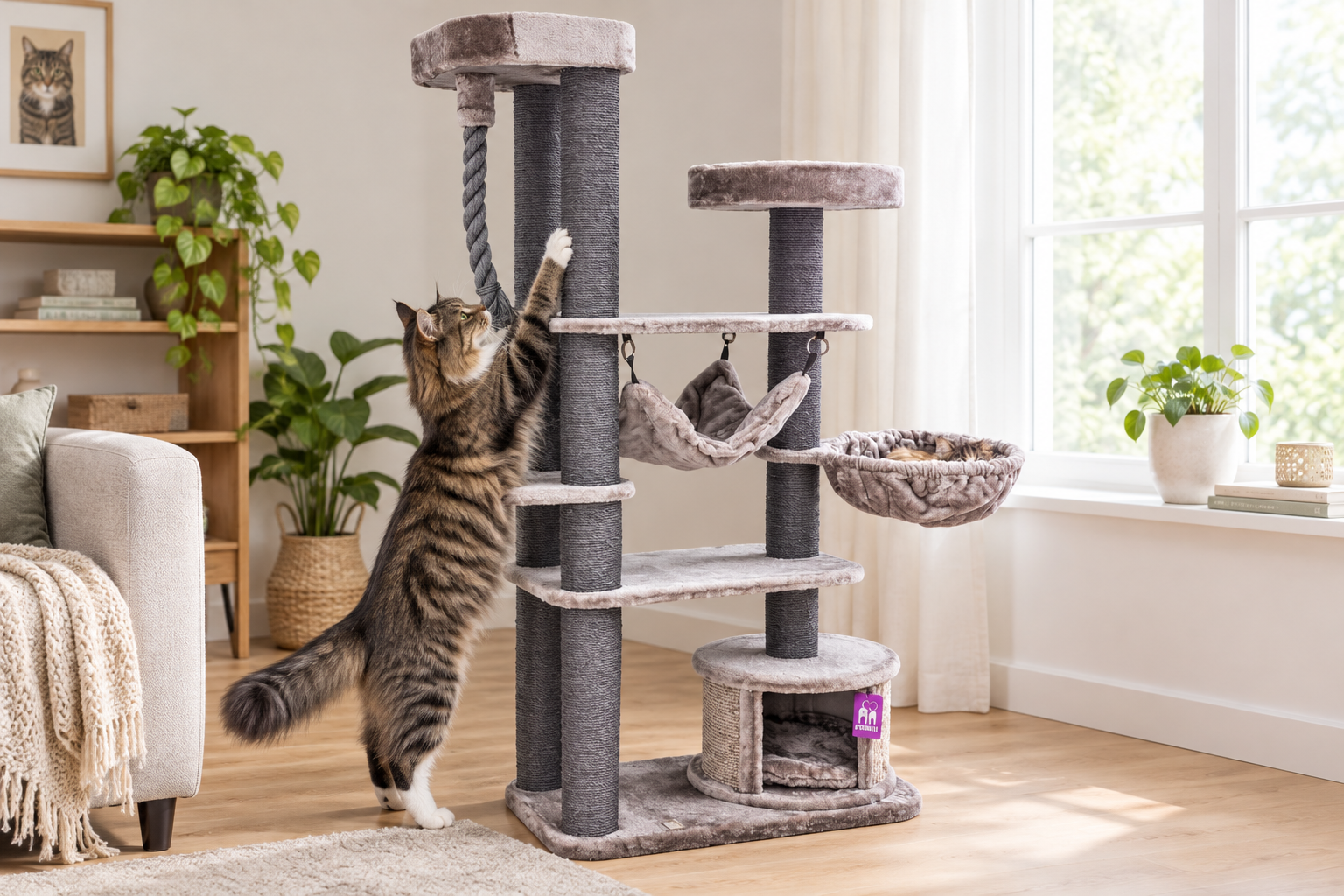
ProPawPicks recommends giving your cat tree a quick vacuum or brush roughly once a week. If you share your home with multiple cats or a long-haired breed, you may need to do this more often. Focus especially on your cat’s favorite napping spots, where fur and dander accumulate fastest.
Choose your cleaning products carefully. Because cats groom their paws and coats constantly, harsh chemical residues present a serious health risk. Petful warns that bleach is toxic if ingested by cats. Care advice from AvailPet similarly warns against using ammonia, essential oils, or scented fabric softeners anywhere near cat furniture.
Lingering Odors: Causes and Fixes
When vacuuming isn’t enough to freshen things up, odors trapped in sisal and carpet fibers usually stem from embedded dirt, dried saliva from self-grooming, or past accidents. For mild smells, Bissell suggests vacuuming the sisal thoroughly and placing the cat tree outdoors in a shaded, well-ventilated spot to air out. If a stubborn smell refuses to budge, you may need to replace the post or re-wrap it with fresh sisal rope.
To neutralize mild, stale odors on fabric platforms, sprinkle a light layer of baking soda over the surface, let it sit for about 15 minutes, and vacuum it up completely (as recommended by ProPawPicks). Keep your cat in a separate room while the powder does its work, and ensure no residue is left behind.
Urine and Marking: Always Choose Enzymatic Cleaners, Never Ammonia
Cat urine requires fast, decisive action before it seeps deep into porous wood and fabric. Veterinary professionals recommend taking the following steps:
- Blot up as much liquid as possible with paper towels. Press down firmly, but avoid rubbing or scrubbing, which only drives the urine deeper into the fibers.
- Apply an enzymatic cleaner formulated specifically to break down uric acid crystals and odor-causing bacteria. For absorbent materials, Zoetis recommends thoroughly saturating the affected spot with the solution and letting it air dry on its own.
- Never reach for ammonia-based cleaners. Urine naturally breaks down into ammonia; using an ammonia product essentially mimics urine scent marks, which can prompt your cat to re-mark the exact same spot (a risk highlighted by both The Ohio State University and VIN).
- Always spot-test the cleaner on a hidden area first, and treat a perimeter well beyond the visible stain. A study on feline indoor marking published in PMC notes that urine odor can disperse up to three times wider than the damp spot itself.
A UV (blacklight) flashlight is an indispensable tool for tracking down dried urine spots that are otherwise invisible to the naked eye.

Urination on a cat tree can also signal environmental stress, an issue with the litter box, or an underlying medical condition. For more troubleshooting advice, check out our guide on how to remove cat urine odor. If your cat begins marking out of nowhere or shows any other changes in bathroom habits, consult your veterinarian right away.
Tackling Fleas in Carpeted Cat Trees
When a cat picks up fleas, the pests don’t stay confined to their coat. Flea eggs easily roll off and settle wherever your pet relaxes: inside cozy condos, along carpeted platforms, and in plush hammocks. According to the MSD Veterinary Manual, flea larvae crawl deep into carpet fibers to avoid light, while Cats Protection notes that flea pupae can remain dormant in upholstery for up to six months.
If you suspect fleas:
- Vacuum every square inch of the tree, focusing especially on your cat’s favorite sleeping nooks. The U.S. Environmental Protection Agency (EPA) highlights vacuuming as the first line of physical defense against fleas, recommending daily sessions during an active infestation.
- Wash all removable cushions, hammocks, and fabric covers in hot water. PetsCare notes that wash temperatures must reach at least 60°C (140°F) to eradicate adult fleas, larvae, and eggs, followed by a cycle through a hot dryer.
- Steam cleaning can neutralize fleas at every life stage in carpets, according to the EPA. However, steam can ruin certain cat tree components—particularly glued sisal rope and untreated particle board—so consult the manufacturer’s care tag before using a steamer.
- Treat both your cat and your home at the same time. If you have kittens, senior cats, or pets with sensitive skin, consult your veterinarian to choose a safe, effective parasite treatment.
Don’t Over-Clean: Why Familiar Scents Matter
Scratching isn’t just claw maintenance—it’s a critical communication behavior. According to the Cornell Feline Health Center, cats leave behind both visual territory marks and scent cues from the interdigital glands between their paw pads whenever they scratch. A frayed post carrying their unique scent brings comfort and reassurance. The ASPCA specifically advises against throwing out a well-loved scratching post simply because it looks ragged: cats often prefer frayed, broken-in textures where their claws grip easily, and the familiar scent makes them feel secure.
Feline environmental needs guidelines published by the AAFP and ISFM recommend steering clear of harsh detergents and strong perfumes that overwhelm a cat’s delicate sense of smell, while warning against aggressively scrubbing surfaces your cat has deliberately marked. Sisal does not need to be sterile. Clear away shedding, litter dust, and actual stains, but avoid spritzing posts with commercial room sprays or perfumed deodorizers.
When Is It Time for a Replacement?
Cosmetic wear and tear is rarely a reason to scrap a cat tree. However, it’s time to repair or replace the unit if:
- The structure wobbles, or the base plate is cracked or compromised;
- Screws, staples, or sharp fasteners are backing out or exposed;
- The sisal has unraveled to the point where your cat’s claws could get tangled;
- Foul odors linger despite enzymatic treatments and thorough airing out.
When you bring home a replacement, set the old tree right beside the new one until your cat warms up to it—familiar scents make the transition much smoother. For helpful tips on introducing new furniture, read our guide on how to get a cat to use a scratching post.
Keep It Dry, Familiar, and Sturdy
The best way to care for a cat tree is with consistent, low-impact maintenance: weekly vacuuming, immediate spot treatments, and routine stability checks. This approach protects the sisal, preserves the reassuring scent markers your cat relies on, and keeps the whole structure safe for years of climbing.
If your current tower is wobbly or showing its age, browse our cat tree collection or read our guide on how to choose the ideal cat tree. For heavy-duty builds equipped with thick sisal posts and rock-solid bases, explore our range of Petrebels cat trees.