

How to Choose a Cat Collar: 5 Things to Check
When it comes to cat collars, safety always trumps style. A well-designed collar must release automatically if your cat gets snagged on something—making a quick-release mechanism far more critical than a cute pattern or a jangling bell.
Here is what you need to know to choose a collar that is comfortable, properly fitted, and designed to keep your cat out of harm’s way.
Quick checklist before you buy:
- A genuine breakaway buckle: Pops open under tension if your cat gets stuck.
- No purely elastic bands: Stretch collars pose a serious risk of trapping a paw or lower jaw.
- The right fit: Neck circumference plus roughly 2.5 cm (1 inch), leaving enough room to slide two fingers comfortably underneath.
- Lightweight and slim: Narrow profile with secure stitching, free of glued-on gems or loose embellishments.
- A safe bell design: If it includes a bell, ensure it is fully enclosed with no open slits that could snag a claw.
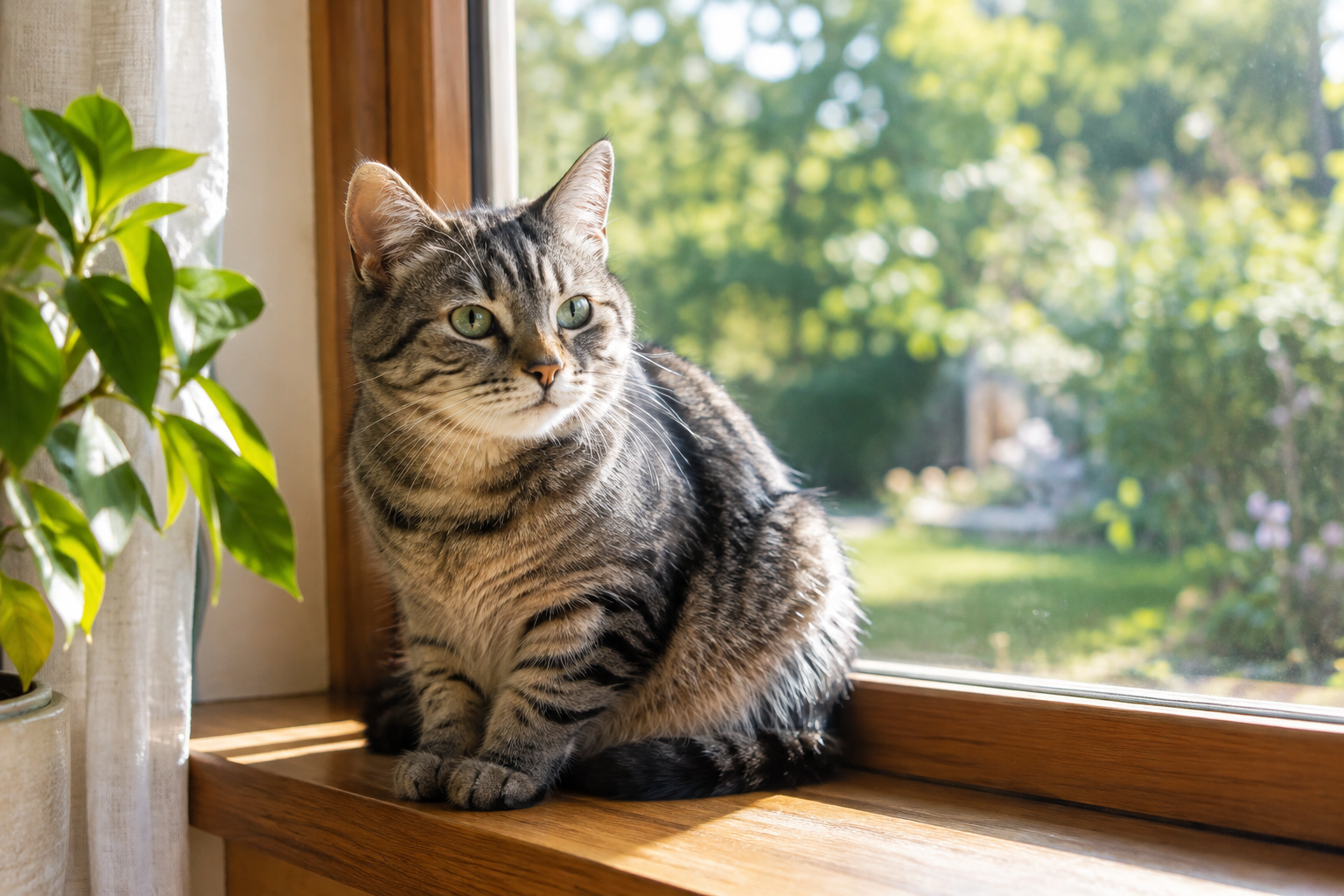
Does Your Cat Really Need a Collar?
While microchipping is not yet universally mandated at the national level in Estonia, local municipal ordinances vary, so be sure to check the pet ownership rules in your area. The Agriculture and Food Board strongly recommends outfitting your cat with a collar that displays your phone number. If your pet ever wanders off, anyone who finds them can get in touch immediately—no specialized microchip scanner required.
A collar and a microchip work best together. Microchips provide permanent, tamper-proof identification, but they only work if your current contact information is registered in the national pet database. Following Estonian Parliament (Riigikogu) announcements in October 2026, legislation is currently in development that will require all cats to be microchipped and registered starting June 1, 2027, with a grace period for existing pets extending to January 1, 2029. (If you are preparing to bring home a new pet ahead of these changes, take a look at our kitten essentials checklist.)
Collars do carry some real-world risks. Major animal welfare charities, including Cats Protection and the PDSA, point out that cats can easily get caught by their collars while climbing trees, squeezing through fences, or roughhousing indoors. Keeping your cat safe comes down to choosing the right tool for their lifestyle:
- Indoor cats: A lightweight breakaway collar tagged with your phone number provides peace of mind in case an open door leads to an unexpected escape.
- Outdoor cats: Look for high-visibility reflective detailing, check the fit frequently, and use only collars with proven quick-release breakaway clasps.
Why a Breakaway Buckle Is Non-Negotiable
A breakaway (or quick-release) buckle is engineered to unlatch under pressure. If your cat gets caught on a fence post, tree branch, or piece of furniture, their own body weight pulls the clasp apart, letting them break free safely. Leading organizations like Cats Protection and RSPCA Australia consistently endorse breakaway collars paired with an ID tag as the safest option available.
Keep these practical safety guidelines in mind:
- Steer clear of elastic-only collars. Once marketed as an escape feature, elastic stretch collars are now widely discouraged by feline welfare experts. Cats can easily wedge a front leg or their lower jaw under the stretched band, leading to severe injuries. If a collar includes an elastic safety insert, make sure it serves as a backup to a breakaway buckle—not a substitute for one.
- Test the clasp before putting it on. Give the collar a firm tug with your hands. The buckle should release under deliberate pressure, but it should not pull apart with a gentle touch.
- Do not rely entirely on the mechanism. Veterinary literature on collar safety notes that while severe collar accidents are rare, no breakaway clasp is 100% foolproof, and release thresholds vary across brands. Regular fit checks and prompt replacements for frayed or stiff collars are essential.
Note: Product descriptions on MiuMjau do not always explicitly detail the buckle mechanism. If a listing is unclear, reach out to customer support before ordering, or test the release clasp by hand as soon as your package arrives.
Getting the Right Fit: The Two-Finger Rule
- Wrap a flexible measuring tape gently around your cat’s neck and note the measurement.
- Add approximately 2.5 cm (1 inch) to that number to account for everyday movement, as recommended by collar specialist Cheshire & Wain.
- Fasten the collar and slide two fingers between the band and your cat’s neck. This classic two-finger guideline is standard across veterinary organizations, including Cats Protection, the PDSA, and International Cat Care.
- Adjust the strap until it sits comfortably snug—not tight enough to choke or chafe, but not so loose that your cat can catch a paw or slip out.
Sizing example: If your cat’s neck measures 22 cm, choose a collar that extends up to 24–25 cm. According to Cheshire & Wain’s sizing data, a 21–26 cm collar generally suits cats weighing 4.5–7 kg, while a 26–31 cm collar fits larger breeds over 7 kg. As Catster points out, most standard adult collars fit neck circumferences between 8 and 12 inches (roughly 20–30 cm), accommodating the vast majority of full-grown cats.
A collar that hangs too loose invites caught claws and jaws; one that sits too tight can cause friction burns, hair loss, and breathing difficulties. Make it a habit to check the fit and examine the skin underneath every week or two.
Kittens Grow Faster Than You Think
Never put a kitten in an adult collar adjusted to its smallest notch. Dedicated kitten collars—such as those made by Coastal Pet—are proportioned for tiny, lightweight frames, and their breakaway clasps release under far less tension than adult models. Because young kittens grow so quickly, organizations like the Furry Critter Network advise checking the collar’s fit every single week to prevent it from tightening unnoticed.
Materials, Width, and Hardware
- Material: High-density nylon is hard-wearing, weather-resistant, easy to wash, and slow to absorb odors (Business Insider). For strictly indoor cats, gentle materials like cotton, canvas, or velvet offer exceptional comfort. MiuMjau carries a range of options, from sporty polyester Milk&Pepper designs to leopard-print leather collars backed with plush black velvet.
- Width and weight: Slimmer, lightweight collars are far less intrusive for cats to wear, provided they are sturdy enough to support a lightweight ID tag. Pawise collars with decorative accents, for example, feature a slender 1 cm profile adjustable from 20 to 30 cm.
- Embellishments: Glued-on rhinestones, heavy charms, and loose studs can fall off and create choking hazards. Cats Protection advises choosing collars with clean, flat stitching and minimal loose ornamentation.
- Bells: International Cat Care cautions that dangling bells can snag on wire, brush, or carpet loops, and claws can occasionally get jammed in standard bell openings. If your collar features a bell, ensure it is completely enclosed with no exposed slits.
- Reflective strips: If your cat ever spends time outdoors, high-grade reflective detailing makes them substantially easier for drivers to spot in low-light conditions.
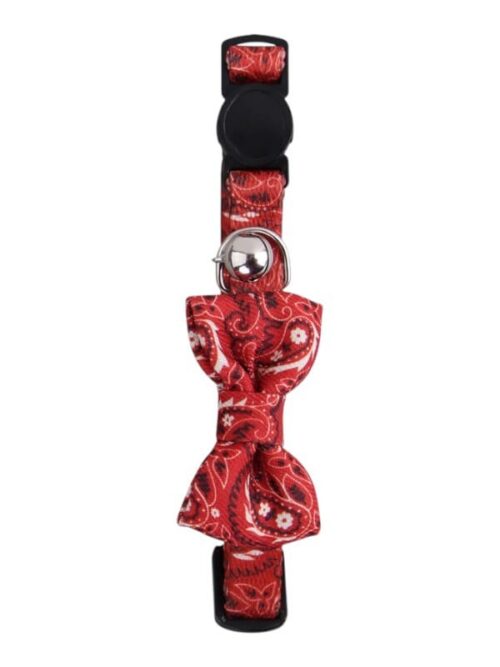
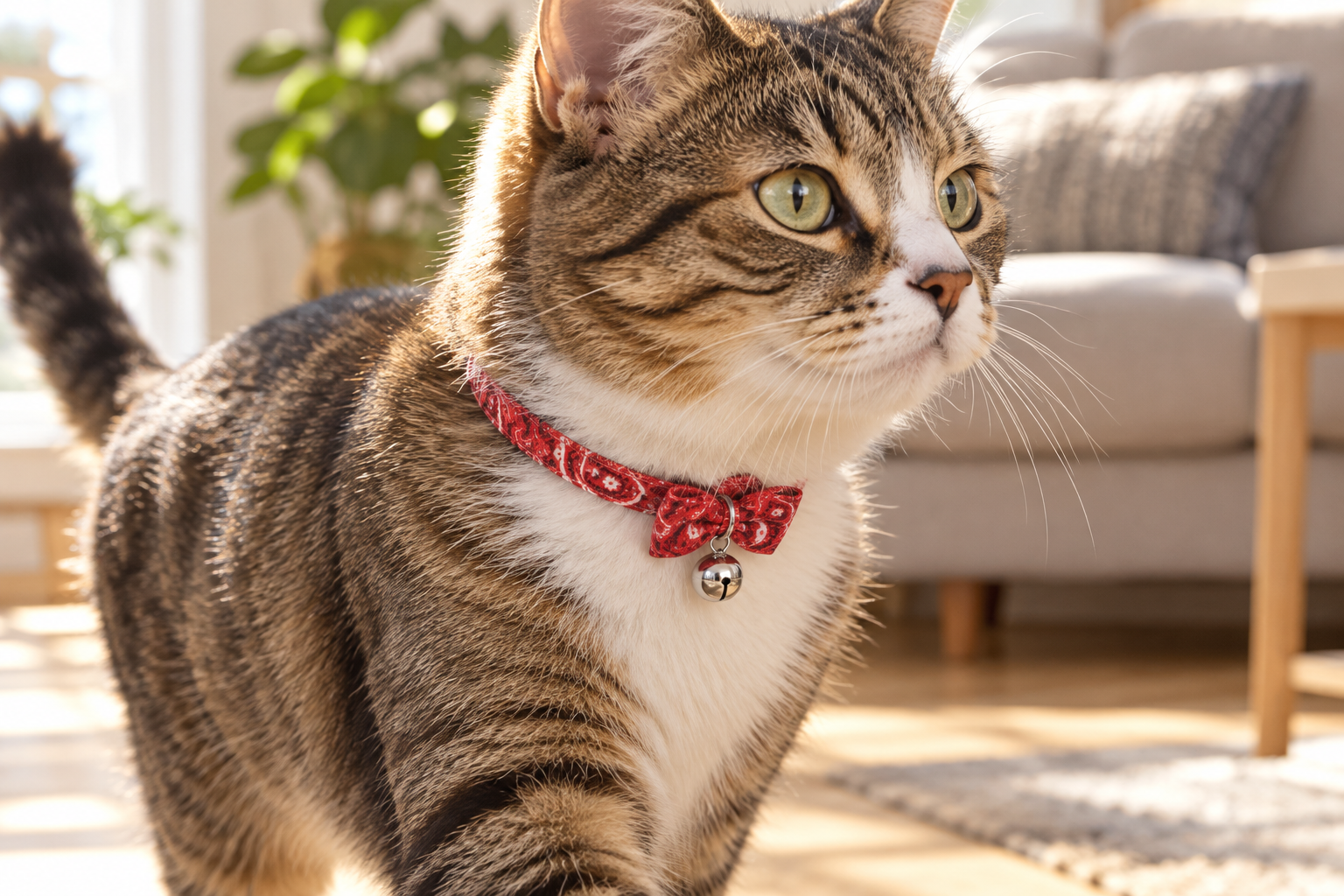
For thoughtfully designed styles that do not compromise on quality, browse our full collars and leashes category, featuring premium lines from Milk&Pepper. Note that certain styles, like the Oroko model, incorporate an elastic safety insert, so always verify the buckle type before purchase.
How to Introduce a Collar to Your Cat
Take a gradual approach over the first few days. Fasten the collar for short periods while you are in the room to observe your cat’s reaction. If they freeze in place, back away, or scratch vigorously at the band, take it off, offer a treat, and try again later.
Inspect your cat’s neck regularly. If you notice localized hair thinning, raw skin, or redness, remove the collar immediately and clean the area with mild pet-safe antiseptic. If irritation or persistent scratching continues, consult your veterinarian (Webvet). Take a moment during these checks to inspect the hardware and stitching for wear and tear.
When to Skip the Collar
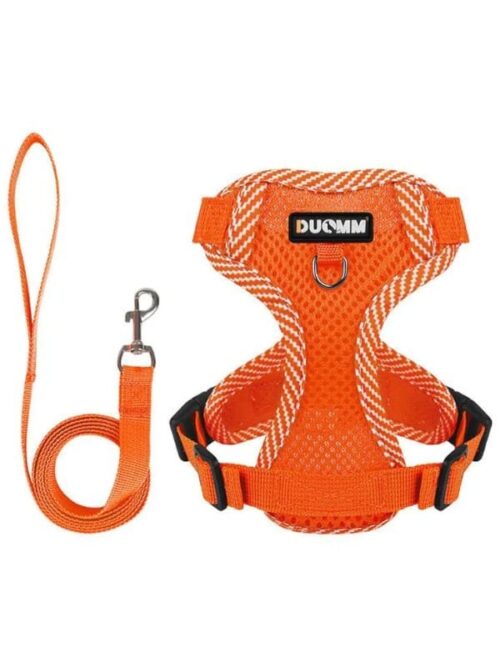
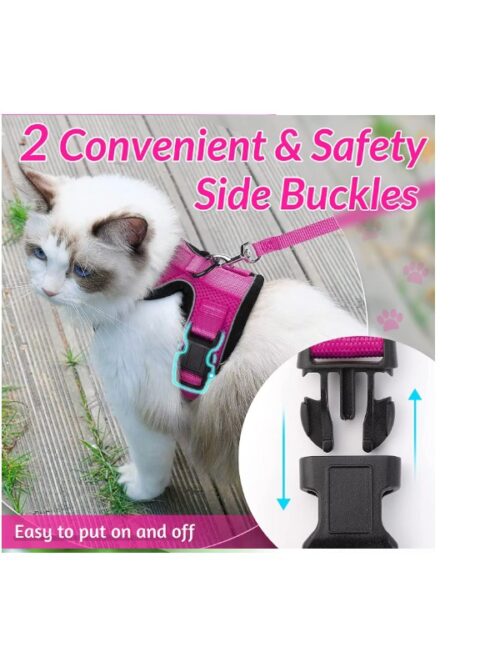
- On leash walks: Never clip a walking leash to a standard cat collar. Cats have fragile necks, and pulling against a collar can cause severe tracheal trauma or allow an agile cat to slip out in seconds. Always use a dedicated walking harness outdoors. For training tips, see our guide on how to train a cat to walk with a harness.
- For parasite control: Flea and tick collars are regulated medical treatments, not standard everyday ID collars. Only use vet-approved antiparasitics designed explicitly for felines; canine flea treatments can be fatal to cats. Learn more in our comprehensive guide to tick prevention for cats.
- When stress outweighs the benefits: Some cats simply will not tolerate having anything around their necks. If repeated, gentle introductions result in persistent distress, panic, or self-inflicted scratching injuries, it is much safer to rely entirely on an up-to-date microchip.
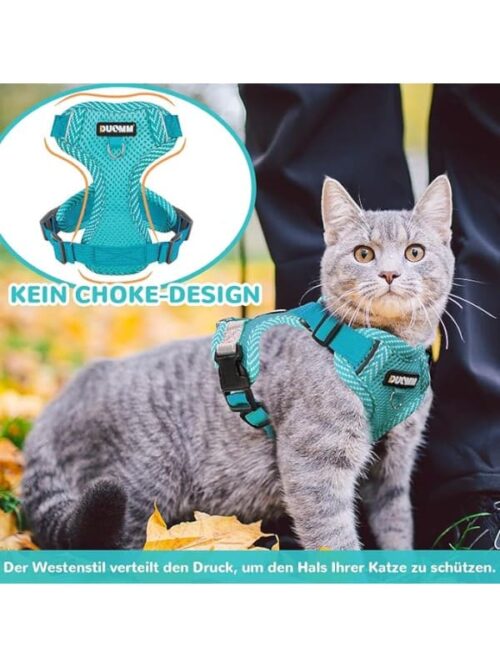


Measure carefully, apply the two-finger rule, and always insist on a reliable breakaway safety clasp. Find the right fit for your pet in MiuMjau’s curated collars and leashes collection.