

How to Clean a Cat Litter Box: Daily Upkeep and Deep Cleaning
A clean litter box is essential for your cat’s health and happiness. As a rule of thumb, scoop waste at least once a day and deep-clean the box every one to four weeks by emptying the old litter and scrubbing the pan with hot water and unscented soap. This simple routine keeps stubborn odors at bay and prevents your cat from seeking out cleaner spots—like your carpet or laundry pile—to do their business.
Below, you’ll find a straightforward cleaning schedule, step-by-step deep-cleaning instructions, common mistakes to avoid, and safe disposal tips.
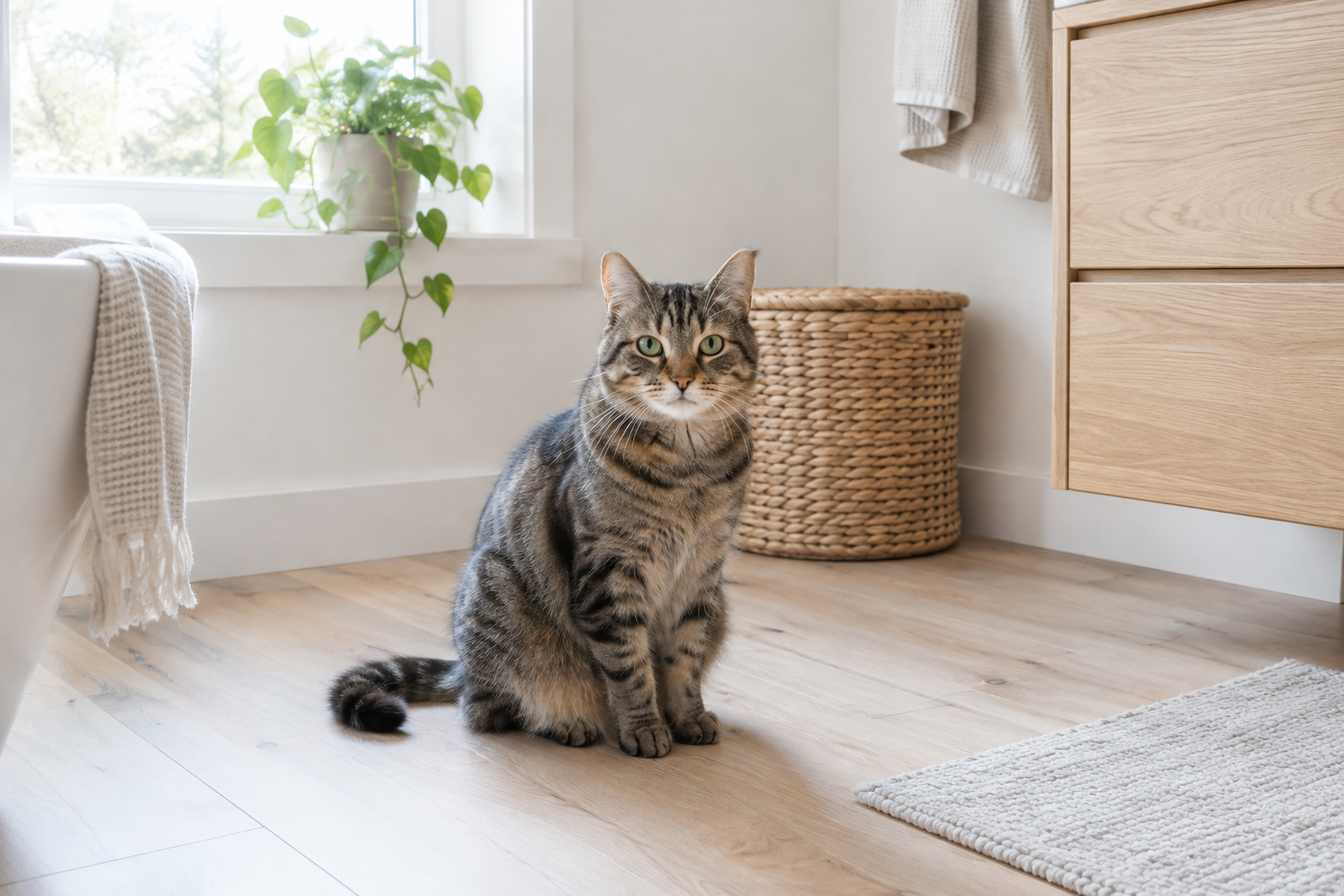
Cleaning Schedule at a Glance
| Task | Frequency | What to Keep in Mind |
|---|---|---|
| Scooping waste and clumps | At least once daily; twice daily for multi-cat homes | Top up with fresh litter to maintain consistent depth |
| Emptying and washing the box | Every 1–4 weeks | Clumping litter lasts longer; non-clumping requires more frequent changes |
| Washing the scoop | With every deep clean | Clean with hot water and unscented soap alongside the box |
| Replacing the plastic box | Roughly once a year (sooner if heavily scratched) | Claw scratches trap odor-causing bacteria that washing can’t remove |
Veterinary recommendations vary slightly when it comes to deep cleaning. The Feline Veterinary Medical Association (FVMA) suggests washing the box every one to four weeks, while the ASPCA advises a weekly scrub. If you’re establishing a new routine, start with a weekly wash. As the Cornell Feline Health Center notes, you should only stretch the interval between deep cleans if the litter consistently remains dry, clean, and free of odor.
Daily Scooping: Why Routine Maintenance Matters Most
Use a sturdy, slotted litter scoop to sift out feces and urine clumps at least once a day. Dispose of waste in a securely tied bag, then add a small amount of fresh litter to restore the original depth.
How deep should the litter be? Contrary to popular belief, more is not always better. The ASPCA notes that most cats prefer a shallow bed of litter—around 1 to 2 inches (2.5 to 5 cm)—rather than 3 to 4 inches (7.5 to 10 cm). Research on domestic felines backs this up: an Italian study found that a depth of roughly 3 cm (just over an inch) is the sweet spot for most cats.
Consistent daily scooping is critical for three reasons:
- It prevents litter box avoidance. In an Italian study evaluating 3,106 cats, 16.7% eliminated outside their boxes. Scooping less than once per day significantly increased the risk of house-soiling.
- It reduces parasitic risks. According to the US Centers for Disease Control and Prevention (CDC), Toxoplasma gondii oocysts become infectious 1 to 5 days after being shed in cat feces. Daily scooping removes the waste before these parasites have time to develop.
- It provides an early health check. Monitoring clump size and stool consistency helps you catch early signs of diabetes, kidney disease, or digestive distress. Zoetis advises pet owners to pay close attention to any changes in urination volume or stool quality.
A note for pregnant or immunocompromised individuals: The CDC recommends delegating litter box duties to someone else whenever possible. If you must clean the box yourself, wear disposable gloves and wash your hands thoroughly with soap and water immediately afterward.
Step-by-Step Deep Cleaning Guide
Follow these steps for a thorough, pet-safe deep clean:
- Put on gloves. If you are sensitive to dust, wear a mask (an N95 respirator is recommended by Wirecutter when handling dusty litter).
- Empty the box. Dump all remaining litter into a heavy-duty trash bag. Use your scoop to gently scrape away any dried clumps clinging to the bottom or sides.
- Soak the pan. Fill the empty box with hot water and let it sit for a few minutes to loosen any stubborn residue. According to PetMD, hot water alone is often sufficient to cut through grime. Add a small drop of unscented dish soap if needed.
- Scrub thoroughly. Scrub the interior and exterior of the pan, along with the scoop, using unscented soap and a dedicated sponge or brush. The ASPCA also recommends baking soda as a safe, mild abrasive.
- Rinse clean. Rinse the box thoroughly until the water runs clear and all soapy film is gone.
- Dry completely. Wipe the box down with paper towels or allow it to air-dry completely. As Bissell points out, any trapped moisture will cause your fresh litter to clump prematurely.
- Refill and replace. Add 1 to 2 inches of fresh litter and place the box back in its designated spot.
As the CDC points out, plain soap and water effectively remove grime and debris, whereas disinfectants target pathogens. If your cat has recently recovered from an illness, consult your veterinarian to see if sanitizing the pan with a specialized veterinary disinfectant is necessary. Always rinse any cleaning product away completely before refilling.
What Not to Use When Cleaning a Litter Box
Cats have an exceptional sense of smell—roughly 14 times stronger than ours. Cleaners that smell pleasant to humans can easily overwhelm a feline and trigger box aversion.
- Ammonia and vinegar: Ammonia mirrors the chemical scent of concentrated cat urine, signaling to your cat that the box is still soiled. The Cornell Feline Health Center advises avoiding both ammonia and pungent vinegar-based cleaners.
- Fragranced and citrus-scented products: The ASPCA notes that artificial fragrances can cause cats to reject the box entirely. Feline behaviorists at Cathealth highlight that cats are particularly repelled by citrus scents.
- Bleach: PetMD cautions against bleach and harsh household chemicals. More critically, Webvet warns that combining bleach with the ammonia present in cat urine creates hazardous chloramine gas.
Hot water and unscented dish soap remain the safest and most effective choices.
When to Replace the Litter Box
Even with routine care, plastic litter boxes don’t last forever. Your cat’s claws and the hard edges of your scoop create micro-scratches across the plastic surface over time. These microscopic grooves harbor bacteria and trap odor compounds that no amount of scrubbing can lift.
Zoetis suggests replacing a plastic litter box annually, while PetSmart and Cats.com recommend a replacement every one to two years. A clear sign it’s time for an upgrade: if the box still smells musty right after a deep clean and dry, the odors are locked into the plastic.
When shopping for a replacement, size matters:
- A cat needs a box that is at least 1.5 times the length of its body, measured from the nose to the base of the tail. If your cat is 45 cm (18 inches) long, look for a pan that is at least 68 cm (27 inches) long.
- In a 2025 study on litter box preferences, cats showed a significant preference for boxes measuring at least 50 cm (20 inches) in length.
- Remember the golden rule: provide one litter box per cat, plus one extra (ASPCA, VCA). A two-cat home should have three boxes located in separate areas.
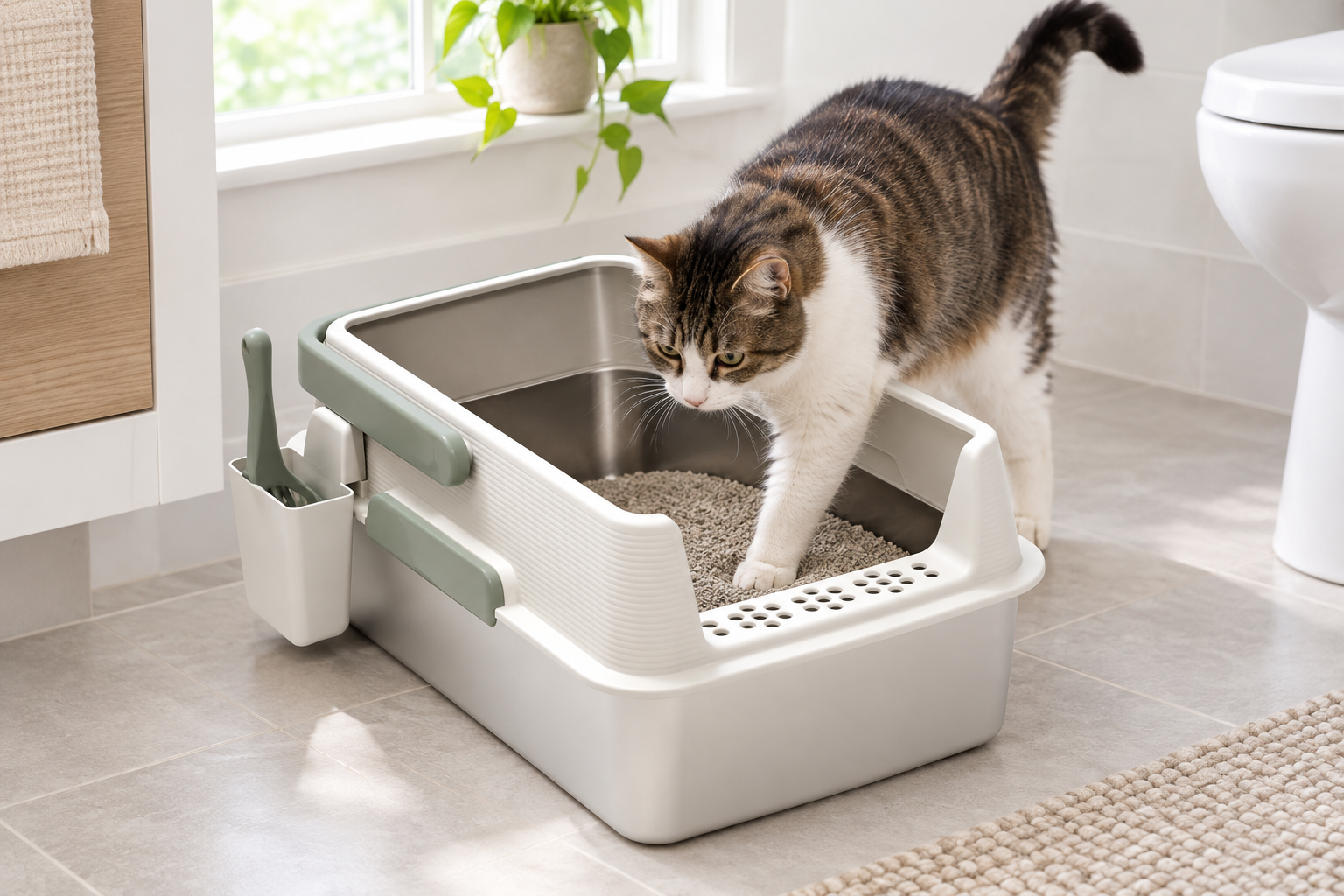
If you want a longer-lasting option, consider stainless steel. Stainless steel boxes resist scratches, won’t absorb lingering odors, and are easier to sanitize than plastic. MiuMjau offers durable stainless steel options as well as high-sided, easy-to-clean plastic pans:
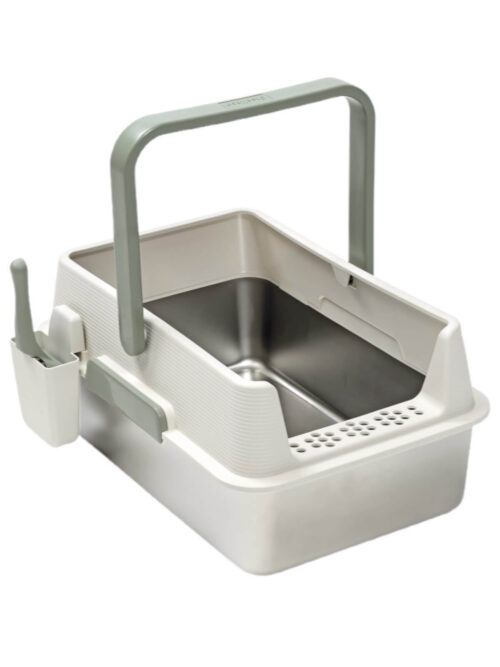
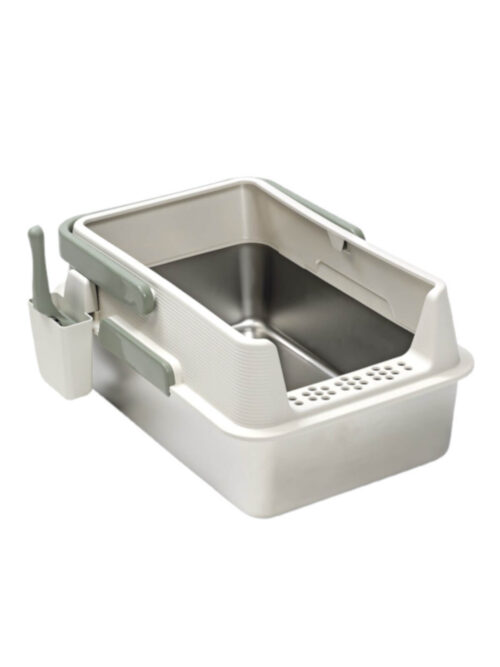

To learn more about finding the right setup, check out our guide on how to choose a cat litter box or browse our complete collection of cat litter boxes.
How Litter Type Dictates Maintenance and Disposal
Your cleaning routine depends largely on the formula filling the box:
- Clumping litter (bentonite, tofu): Daily scooping preserves the remaining litter, allowing you to stretch full replacements further. Explore a detailed timeline in our guide on how often to change cat litter.
- Non-clumping litter: Because urine settles at the bottom of the pan rather than forming tight clumps, the entire box must be refreshed frequently. Best Friends Veterinary Center recommends replacing non-clumping clay every other day.
- Multi-cat households: The more cats you have, the faster litter saturates. Plan to scoop at least twice daily (Bissell, Hemopet).
Safe disposal guidelines: Under standard municipal guidelines (including Estonian national waste sorting protocols), used cat litter belongs in general household trash—never in organic bio-waste bins. Always place litter and waste in a securely tied garbage bag to prevent dust and pathogens from escaping. Check your local municipal guidelines for specific disposal regulations.
Can you flush cat litter? Never flush bentonite clay or silica gel litters; they expand in water and will severely damage your plumbing (Sanicat). While some plant-based or tofu litters claim small amounts can be flushed one clump at a time, organizations like Consumer Reports strongly advise against flushing any cat waste, both to protect home plumbing and to prevent municipal water contamination. When in doubt, bag it and bin it.
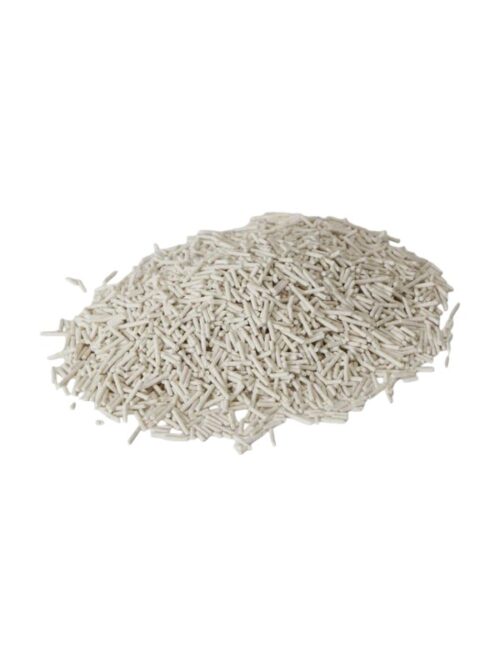
Curious about plant-based options? Read our comprehensive review of tofu cat litter, or consult our guide on how to choose the best cat litter. Explore two top-rated options from MiuMjau below:


What If the Box Is Clean, but Your Cat Still Goes Outside It?
If your cat suddenly stops using a clean litter box, treat it as a medical issue first. The Merck Veterinary Manual stresses that eliminating outside the box is often the earliest clinical sign of feline lower urinary tract disease (FLUTD), a urinary tract infection (UTI), or bladder stones. Always schedule a veterinary checkup before assuming the issue is behavioral.
If your vet rules out underlying health conditions, evaluate these environmental factors:
- Is the box large enough for your cat to comfortably turn around?
- Do you have enough boxes (number of cats + 1)?
- Is the box placed in a quiet, low-traffic area away from loud appliances?
- Is the litter unscented and soft on their paws?
- Did a cleaning product leave behind an abrasive or chemical smell?
When dealing with accidents, never use standard household cleaners. Reach for a targeted enzymatic cleaner. The Excellent Pets spray available at MiuMjau chemically breaks down uric acid crystals and lifts persistent stains. Use it on carpets, tile, and upholstery—just avoid spraying it directly inside the litter box, as any added scent may deter your cat:

For deeper insight into tackling persistent stains and smells, see our practical guide on how to get rid of cat urine smell.
Build a Routine Your Cat Can Rely On
Cats thrive on predictability. Anchor scooping to an established part of your day—such as first thing in the morning or right before bed—so it becomes second nature. Set a calendar reminder for a monthly deep clean, and inspect the pan annually for scratches.
If your current setup looks worn or holds onto odors, explore our curated selection of litter boxes to find an upgrade that keeps both your home fresh and your feline content.